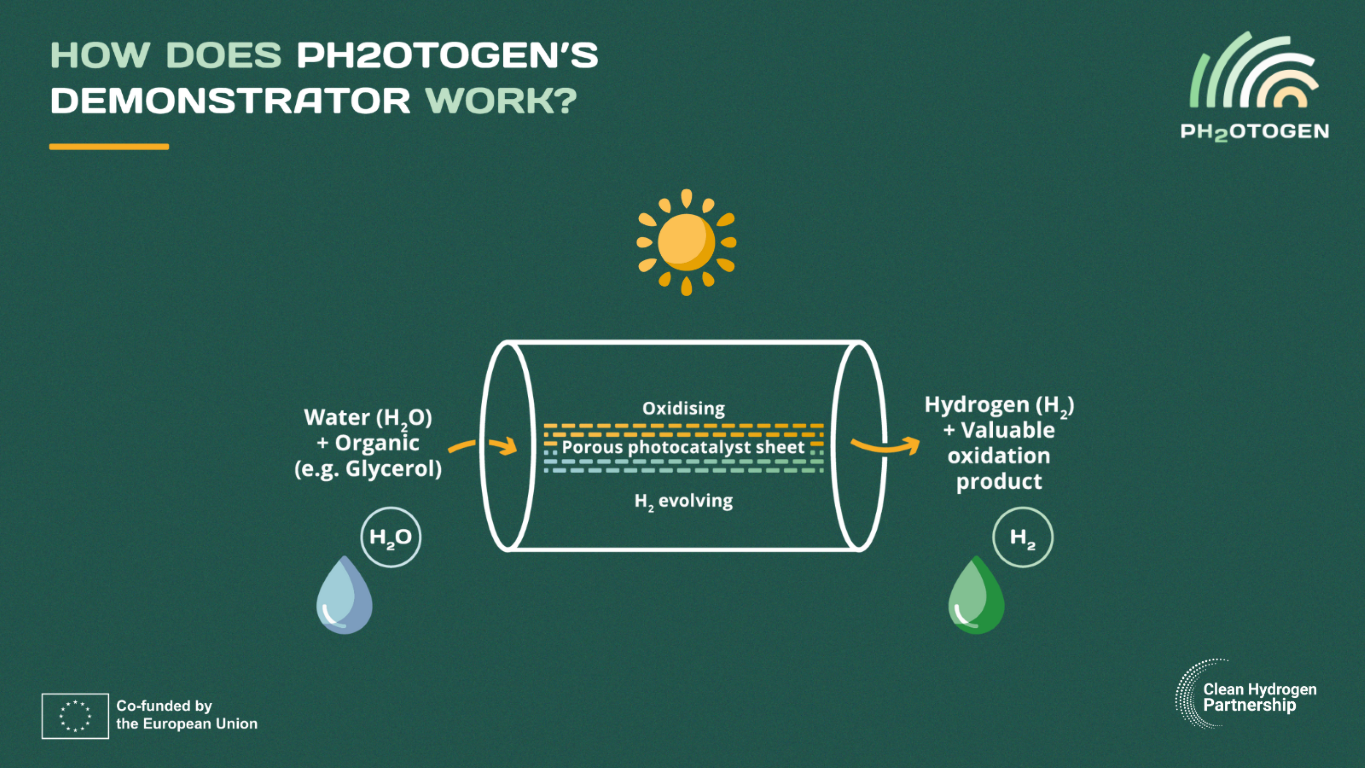
The PH2OTOGEN project has developed an innovative demonstrator that utilises sunlight to produce green hydrogen while oxidising low-value organic molecules, such as glycerol, into valuable chemicals.
Here’s a simple breakdown of the process:
- Input Materials: Water (H₂O) combined with an organic compound (e.g., glycerol) is introduced into the system.
- Photocatalyst Sheets: The system features two photocatalyst sheets in contact with each other, forming a single functional unit. One side is designed for hydrogen (H₂) production, while the other side oxidises glycerol into a more economically interesting reaction, such as DHA (dihydroxyacetone).
- Photocatalyst Action: The photocatalyst sheet is activated under light, generating electrical charges that are used to produce green hydrogen from water and simultaneously convert glycerol to DHA.
- Output Products: As the reaction proceeds, the system produces hydrogen (H₂) as a clean fuel and converts glycerol into dihydroxyacetone (DHA), a valuable chemical with various industrial applications. This dual-output process enhances both economic and environmental sustainability.
What Are Glycerol and DHA?
- Glycerol: A byproduct of biodiesel production or a platform molecule from sugars, glycerol is a low-value organic compound.
- DHA (Dihydroxyacetone): DHA is a valuable chemical used in various industries, including cosmetics, pharmaceuticals, and food.
- By leveraging sunlight and innovative photocatalysis, PH2OTOGEN aims to provide scalable and eco-friendly hydrogen production technology while converting glycerol into economically valuable product, such as DHA.
Demonstration and Impact
The PH2OTOGEN demonstrator aims to showcase the feasibility and scalability of this technology in real-world conditions. The goal is to surpass 5% efficiency over 500 hours in a 500 cm² prototype. By demonstrating the process from lab to practical application, the project seeks to validate the efficiency and economic viability of producing green hydrogen and valuable chemicals through photocatalysis. This effort underscores the project's commitment to developing sustainable energy solutions and reducing carbon emissions.
Want to stay updated on all the latest developments of the project? Subscribe to the PH2OTOGEN newsletter.